The real issue with "clay-like design freedom" is the collective knock-on effects of thermal and conductive inefficiencies.
We've had "clay-like design freedom" since the early days of carbon-zinc batteries, but it turns out that it's far better (both for manufacturing, chemistry, and safety) to have a continuous volume of relative thermal and electrolytic quiescence that's, largely, isolated from physical strains.
That this is even being highlighted as a "feature" makes other claims even more dubious.
Suffice to say that any battery ("electrolytic cell") that's undergoing dynamic strains will have vastly different levels of conductivity (hence power output and contribution to thermal load) than one that is geometrically static.
Put another way, the performance gains from utilizing the motor as a "stressed member" (akin to F1 monocoque) in combustion vehicles was only possible circa 50+ years after the invention of the 4-stroke cycle. Talk to me in ~20 years.
FWIW, my degree is in electrical engineering and I worked on our college's solar car back when "solar car racing" was "a thing".
You do not want the stressed members of any structure being a salient contributor to its power-train. Not related, see mammalian, reptile, fish, and insect physiologies.
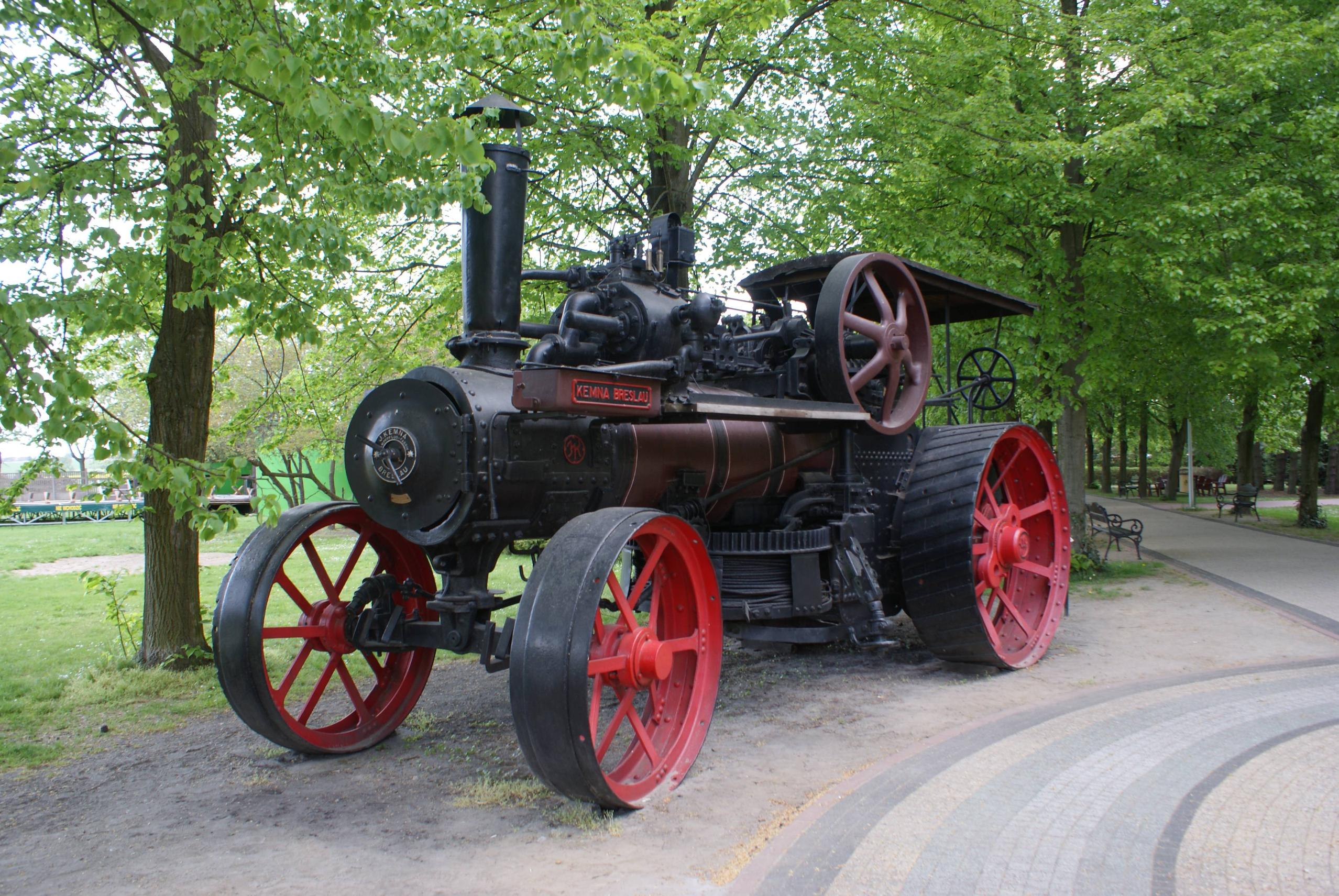
You can see in the picture the boiler is taking the load of the machine. There is no additional chassis.
That's less frame than a Ducati has between the front and rear wheels.
Without speaking to the wisdom of stressing batteries mechanically, the idea of using drivetrain components as structural members of a vehicle is as old as self-propelled vehicles.
Hell, even a chariot sees the horse taking a part of the vehicle load.
Merely "using drivetrain components as structural members" is not a monocoque, but it's a start.
You're correct on the chariot.
A monocoque incorporates ALL components as stressed members so even a classic Lotus Esprit would fail that strict definition given that both hood and trunk are free-floating cantilevers, but point taken.
>You do not want the stressed members of any structure being a salient contributor to its power-train. Not related, see mammalian, reptile, fish, and insect physiologies.
A steam traction engine is certainly at a different level to an F1 car, in both performance and engineering.
On the other hand, I think adding dynamic load to a steam boiler is riskier than doing so to an internal combustion engine.


We've had "clay-like design freedom" since the early days of carbon-zinc batteries, but it turns out that it's far better (both for manufacturing, chemistry, and safety) to have a continuous volume of relative thermal and electrolytic quiescence that's, largely, isolated from physical strains.
That this is even being highlighted as a "feature" makes other claims even more dubious.
Suffice to say that any battery ("electrolytic cell") that's undergoing dynamic strains will have vastly different levels of conductivity (hence power output and contribution to thermal load) than one that is geometrically static.
Put another way, the performance gains from utilizing the motor as a "stressed member" (akin to F1 monocoque) in combustion vehicles was only possible circa 50+ years after the invention of the 4-stroke cycle. Talk to me in ~20 years.
FWIW, my degree is in electrical engineering and I worked on our college's solar car back when "solar car racing" was "a thing".
You do not want the stressed members of any structure being a salient contributor to its power-train. Not related, see mammalian, reptile, fish, and insect physiologies.