Do any of you have children at a school using Google Chromebooks and Google Drive? Calling Windows S a Chromebook competitor completely misses the point.
Chromebooks are instant on, and your profile/data is 100% cloud based. You can grab any Chromebook from the rack in the back of the classroom, open it up, log in and immediately get to work on your report or whatever.
I got an original Chromebook from Google I/O years ago based on an ancient ARM chip, and it's still perfectly usable for when my kid's friend comes over to do homework and they need an extra box.
Windows and Mac computers will never be that easy to setup, use or maintain. Chromebooks and the cloud system of apps that Google has made is pretty much a perfect combination of simple and cheap and good enough.
Exactly, these are single purpose laptops for education.
And I do believe that google docs has an offline mode now. So they can work offline for a limited period (at least).
And how does this 1000 USD compete with 250 USD boxes?
The way it likely competes (which I'm not saying I agree with) is on supportability and productivity.
That is to say, I'm sure Microsoft has data that "shows" these will be cheaper to administrate and support than Chromebooks. Combine that with all the software you can install, or offline workflows, etc and Microsoft comes out on top (according to Microsoft).
It's how Microsoft has always done things. I'm not here saying it's right or wrong, I'm just trying to answer your question.
Actually, this is more like the opposite of how Microsoft has always done things. When they've entered markets, from OS to word processing to RDBMS to web browsers, they've consistently produced simpler, cheaper products. Then they've gradually improved them until they became credible competitors and often dominant choices.
With phones, tablets, and now cheap school laptops, their timing didn't allow that. Google has already succeeded with the classic Microsoft strategy, all the way down to commoditizing the hardware vendors. Microsoft is instead coming in as a semi-premium option, combined with inertia/safety as a brand trusted by enterprises. The same play is a bit more successful in cloud computing, but they're still losing to AWS who are nailing the classic Microsoft strategy. Assuming they continue to decline in their ability to rapid-follow in new technology platforms, I expect they'll look more and more like Oracle and IBM.
Windows 10 S will run on other devices besides the Surface Laptop, most of which will cost closer to $250. The Surface is just the flagship device for it.
Google is notoriously famous for their automated and permanent /kickban. It's literally the first law when using their products : "Don't trust them and never put important stuff in one single place".
It doesn't surprise me that your child could trigger accidentally one of those super ban. At least it's not that bad, they could have banned your account too.
I mean, I use Google products all the time. But I have multiple accounts ready to go, and everything important backed up offline, because I work in IT, and I've dealt with too many horror stories.
Google products work wonderfully until they don't, and the trigger to account loss may be a complete accident. And there is virtually no recourse when it does.
Their systems are not as foolproof as people seem to think. I've gotten other people's pictures in my photostream, and other people's appointments in my calendar. I'm sure it goes the other way, too, and that is something that 100% should be on your mind whenever you use their services.
She saw a chain email (i.e. forward this to 10 people!) and decided it would be fun to make up her own. Apparently it was successful enough to get somebody's attention.
Edit: To be clear, I would never blame them for wanting to stop a cascading explosion of emails. But I also wouldn't say it's impossible for a child to get an account banned.
It's a problem because Google banned the account. Doesn't matter if it's unclear about policy violation given they're the ones making the decision and providing limited opportunities for recourse.
Sorry, should've made it clear that I was making a separate point - that it doesn't matter either way when someone else can make a decision and limit follow up. It's long been a frustration for many with Google services.
"5.4 You agree that you will not engage in any activity that interferes with or disrupts the Services (or the servers and networks which are connected to the Services)."
It clearly states "Google does not serve ads in the Core Services or use personal information collected in the Core Services for advertising purposes."
Is the evidence that indicates this is not true? Is this in relation to non-core services that school administrators may opt into?
They aren't using it for advertising purposes right now, but they can still collect and store the data on children thanks to outdated privacy laws. Once the child comes of age all of that information is fair game according to their own policy (once the child becomes an adult, if they continue to use their account or link it to a new Google account, they are automatically under Google's normal privacy policy which we all know allows them to harvest everything you do within their services).
No matter what the privacy notice by Google says, you should absolutely discount it since Google has a history of steadily making privacy agreements looser over the years (and they are legally allowed to do so). In 2014 they amended their policies to join the Google and DoubleClick cookies for targeted advertising. In 2016 they started joining that with YouTube history for targeted advertising.
Very true, I was thinking of Chromebooks purely from a utility standpoint, but if parts of Google's plan is to build profiles on children starting from when they're young, that is actually especially nefarious.
I'm worried most of all that Google will use some sort of sentiment analysis or other machine learning tool to classify kids based on academic ability and build a sort of "cognitive profile" on children as they age.
This is really disturbing. Pretty much the literal definition of "hook em wile they're young. I am starting to think we need a standard oil style breakup of google/amazon/fb.
That's a very real concern. As a parent I think about things like that all the time. My son has a personal Chromebook and both my son and daughter use Google school accounts.
The alternative, in this case using a Microsoft Surface Laptop instead, should raise many of the same concerns. With the tight coupling of online services and single account sign-on options that Microsoft offers, similarly extensive advertising and usage profiles can be built.
I'm ok with google knowing my location every second, I'm ok with receiving targeted shopping ads about watches after I browse watches on Amazon. I block ads when I feel like it, it's no skin off my bones.
It's not like men in black suits accost me at bus stops and force fliers into my hands with targeted ads. It's in my mind, literally harmless.
I'm more worried about the future misuse of all the accumulated data from their access and version control logs for cloud-based documents, internet browsing behavior, multi-player gaming sessions, personal emails, and all of the other forms of trackable interactions that my kids (and the rest of us) generate with on a daily basis.
It doesn't keep me up at nights -- but the paranoid part of me thinks it should.
Can you define misuse better? I'm not asking to be cruel, I just genuinely don't understand why someone would find the kind of personal information collection that is happening already, to be upsetting.
I.e. I see targeted ads regularly, so I know that I am being tracked by google et al, but this does not upset me. Can you help me understand why this should upset me?
It's 2037. A substantial chunk of 20-year-old Google user data got into the wild via (sale / theft / government regulation / who knows? A lot can happen in two decades).
Some enterprising startup fed that data into a simple ML algorithm and correlated it against other publicly available data. Turns out, your search history as a kid partially predicts adult outcomes like salary, grades in college, chance of bankruptcy, chance of arrest, etc. That startup sells this info to Experian, who adjusts their credit scores accordingly.
I can see why this would be a problem, but I would say it could be solved by making it illegal to adjust credit score based off non-transactional financial data. But I understand the concern better now, thank you.
EDIT: All of my comments in this thread are being downvoted, presumably because
1. People are assuming I support advertising, and advertising to children
2. People are angered by that and thus downvote me.
All I'm intending to do is clarify why readers don't like the concept of advertising, or advertising to children. Is this offense, to ask for a clarification?
I wouldn't be "happy" to give them all my info. I'd like to be able to share my screen with the person standing next to me, "look at this thing I've found", without worrying some advertiser is going to reveal any personal detail they'd like to infer about me through which advert they pop on my screen.
Especially if we're talking about children and young adults, where even "you watch that tv show?" can be a source for social discomfort.
Advertising is often coercive, designed to manipulate people into buying things they don't need/overpaying for things. E.g. brand advertising is why people pay $150 for a $10-pair of jeans made in Vietnam. Children's brains aren't fully developed, which makes them uniquely susceptible to manipulation via advertising. At the same time, they have no conceivable need to learn about different products, because almost none are direct participants in the economy.
It's difficult to categorically ban advertising in a free society, but at least in the U.S. speech that does nothing more than propose a commercial transaction is subject to lower First Amendment protections, and the combination of harmful effects on children and the lack of any benefit probably get you over the First Amendment hump in that specific scenario.
They don't use their personal accounts. Accounts are managed for students in much the same way as the would be for a business hosted with Google Apps - https://edu.google.com/
But your complaint is still valid in the larger sense that you don't want to allow Google to have any say in the matter.
What we need is for Google's school/office apps and their storage to become open-source commodities that are self-hosted. "Self-hosted" can then involve any balance of self/outsource you or your organization would like.
That's what standards are for. If all your storage is based on a shared standard, anyone can implement a replacement for a given unit of data. Unfortunately, standards are not cool these days, because they make vendor lock in difficult to achieve.
I've never used a Chromebook so this is an honest question - do they not have any kind of local sync, so you can work on your stuff and then upload it back to the cloud next time you get online?
There is local sync for Google Drive applications (Docs, Sheets, whatever the other ones are called). There is, albeit small, an internal SSD for Chromebooks. On the whole, it's up to the web app developers to handle that functionality.
There are also local apps. The app platform is a little like Electron or Node -- locally-installed JavaScript with extra APIs that aren't available on the open web. Examples:
Recently, yes, you only lose adsense access - at least in my recent experience.
Originally, you lost the email account.
I once lost an adsense account by doing absolutely nothing.
I was in a university where internet was slow and hard to get. After a semester, logged back into my adsense connected blogger account but was told the account was blocked and couldn't be retrieved.
Except they work fairly well offline if you choose to store some data offline or in pen drives. Also, latest ones run almost the whole play store which completely changes the game. They can work as better android tablets when offline.
The down votes are likely because you're stating a regional behavior as if it's the universal norm. My children use Chromebooks at school, and fwiw they are very happy and productive with them. They're extremely prolific across the school boards in my jurisdiction. This isn't necessarily true everywhere, though.
At schools that use Chromebooks, they take away the Chromebooks during exams -- unless the exam is being taken on the Chromebook, which is a thing that happens.
At schools in Poland. You can't have internet access so you won't look up answers on the internet. You have just computer in from of you. It's pretty standard way of doing any kind of grading.
Example would be for programming class or for office suite. You don't need internet to work in IDE or in Office.
As long as you log in before internet is disabled (don't show up late to class?), you'll be in your user account. The laptop screens don't become black once they lose internet connection.
Google Docs/Sheets/etc supports offline editing, and a quick Google shows there are IDE's that run on a chromebook with offline mode support.
How does that make for a reliable exam? In the real world you use the internet all the time. The exam should be about your skills, and using information sources like the internet should be one of them. It's not like you can 'download' a perfect answer to a programming exam online, and if you can, then you deserve a medal because you'll be able to build applications faster than everyone else.
For mere facts, I could kind of agree, though it is important to learn certain things, like certain historical dates, which you could perfectly google quickly, but not having them in mind means you can't follow a live discussion on the topic. But in disciplines like math or physics, it's about understanding what you are doing. Googlying-copy-pasting without understanding the solution of an exercise defeats its purpose. And it's not because you can google-translate a piece of text that you can speak that language.
I am all for modernising education but I am kind of appalled by the culture of google-copy-paste that I have seen 20-something doing when they are confronted to a problem, instead of trying to understand it and having a "what would make sense?" approach.
As a Ruby developer who has been running my own development business for 10 years and still has to look up how to use Ruby's CSV class every time I use it - I doubt that online answers are going to be what puts me out of business.
You can use many ChromeOS apps in offline mode. And if your ChromeOS laptop supports Android apps then all of the apps are available whether offline or online.
Yeah, my high school has them and your description is spot on. What I notice is that Google's chromebook ecosystem is dedicated towards sharing and collaborating which works well at schools.
For many reasons, Hacker News is FILLED TO THE BRIM with Google employees. I know this because anytime an article comes on here about Google Cloud that thread is immediately taken over by employees (many of whom to their credit identity as such) talking about how much better GCP is than AWS.
Now GCP today is kind of cool, still somewhat away from AWS but they certainly could catch up for sure, especially as the world shifts to more AI stuff where Google is already beating AWS.
However I remember back in 2014 seeing comments about how much better GCP was than AWS. Let me just state that that was physical impossible back then. Laughable and again, physically impossible. It's so impossible I'm still mildly upset all these years later.
Sorry for the rant but did want to document that here. That being said my sister uses Google Adsense for work and she has no complaints :)
> Windows and Mac computers will never be that easy to setup, use or maintain.
While half true, I think Microsoft could ship that if they wanted to. Moreover, only listing the things Chromebooks are great at is also missing the point: there are areas where Chromebooks suck and that is where Microsoft can compete.
> there are areas where Chromebooks suck and that is where Microsoft can compete.
Absolutely, but Windows 10 S cannot do any of them.
Windows 10 Home/Pro can, but we are talking about the S version which is more comparable functionality wise to a Chromebook. Particularly a Chromebook that can run Android apps.
After your AD Profile is downloaded to the laptop which can take several minutes, and often the profile will remain on the machine after you return it to the cart. Plus software/settings might vary from machine to machine even from the same laptop cart.
The thing about Chromebooks is that the state is always consistent and your settings follow you. That's much harder to attain with Windows laptops (not impossible mind you, there is software that will revert a Windows machine back to a set state, but that isn't common/standard).
O365 is a great package for organisations (e.g. Planner, Teams, OneNote Online, Lync, etc) but in that situation you're giving employees laptops to keep as their own. In schools you want the machines to be disposable, in that situation Chromebooks are special.
OneDrive is just a DropBox clone, it doesn't really solve many pain-points.
The whole Windows, AD, O365 etc. experience is a PITA. I know there are all sorts of technological legacy and legacy business reasons for that, but let's face it: in the current form, the Windows model can't compare to something integrated like a Chromebook. It's not about who is 'better' or technically more capable, it's about what works for users, and Windows isn't it. Most of the time it is just what 'happens to be there'. That seems to be forgotten quite often.
I do wonder when some form of revised windows will come along that does away with 16-bit/32-bit legacy stuff, removes all the ancient API's and just focuses on the here and now. Breaking hard is of course not really Microsoft's way, as they make far more money by keeping legacy and tradition around, touting 'business support'.
That's what Metro was supposed to be - a complete reimagining of Windows in the modern era, with a legacy Desktop mode if you really wanted it. But it turned out the legacy desktop mode was the only part of it the market actually wanted.somehow I don't think think not including the legacy mode would have made it any more successful.
The market still wants Win32 because metro/uwp was crippled, limited. Or more precisely, apps built on the new platform were not powerful. Microsoft Edge which was built as a tech demonstrator still had to rely on private APIs.
Second reason: The only place to discover and install the new apps is on the store which has bad, awful, pitiful search to using google or even bing. I don't know why MS doesn't leverage Bing in the store.
Lastly, in my locale and surrounding countries, sharing EXES is still necessary because of internet speed and data limits.
Ms removed the Small text size download links in the store. And their TOS prohibits development of apps to download them.
To give a context of importance of UWP/Metro installation files downloadability:
A customer walks into my shop and buys a new Android phone. And after that asks me to fill up the phone with apps like dictionary, bible, WhatsApp, anti-virus, games... for a fee.
The same happens with Windows desktop portion. But this isn't feasible with the new apps - internet cost and download time.
And it was one chief reason why Windows Phone didn't take off - at least in my country.
A friend return a chrome book last year simply because he couldn't just copy apps from others (like on windows).
The Pixel line was impressive apart from the abysmal onboard storage. I would have considered one for a Linux laptop but the less-than-desktop-functionality OS (thereby reducing your expensive device to a glorified web browser) paired with the joke storage meant it was never going to get far?
I thought the Pixel line was more meant for internal consumption and as a tech demonstration for the capabilities of Chrome OS rather than as serious effort by Google to create a high volume mass consumption product.
Terry Myerson demonstrates a PC management app which streamlines setup at around 24 min into the video at http://event.microsoft.com/MayEvent/. The demonstrations look promising.
I recently interacted with a high school kid that was given a school-provided chromebook that had the most inane website filters following him around, the USB ports literally disabled, and tons of hoops to jump through to accomplish simple tasks.
For such a locked down platform, you really would think they wouldn't have to pull this shit.
Sentiment is slightly negative. Chrome OS is unpopular among techies for not doing things "real" computers can do. Login used to be very sluggish (it goes through a district SSO page, not normal google login), maybe it is better now? Don't think I've heard anyone say good things about them, but not a lot of complaints either.
The web filter is minimal (porn, pretty much), but that's just the district wifi (opendns), not the chromebooks themselves.
I am curious if Chromebook for schools completely block access to development mode? I have found out that with that mode enabled and Crouton I could develope Java applications offline using Eclipse and testing things using local webserver.
I believe blocking it is an option. Can't do developer mode if you're enrolled and they can force enrollment on a device so if you try to wipe it and access developer mode it refuses and forces you back to enrollment.
> Chromebooks are instant on, and your profile/data is 100% cloud based. You can grab any Chromebook from the rack in the back of the classroom, open it up, log in and immediately get to work on your report or whatever.
First of of all that's not entirely true. Nothing is instant. It wakes up fast, but not instantly. Login is fast, but not instant. First time login is fastish but not fast or instant.
Windows has had Roaming User Profiles since NT, Google calling the feature "cloud based" is just another way of saying remote. Since Windows 8 you could have a Microsoft Account which was a "cloud based" user profile and use Sky/One Drive which is a "cloud based" data repository.
My guess is you didn't watch the webcast? They made special mention of the fact that with Windows 10 S they had improved the login and first login times to be much faster than your typical Windows experience.
> I got an original Chromebook from Google I/O years ago based on an ancient ARM chip, and it's still perfectly usable for when my kid's friend comes over to do homework and they need an extra box.
That was what they advertised here. In Windows 10 prior to this announcement you could grant any other Microsoft Account access to login to your machine and it would download their profile and provide them access to their One Drive. The experience isn't as fast as on a Chromebook but it's less than a minute. The emphasis in this announcement was that with Windows 10 S they got it down to under 20 seconds which is Chromebook speed.
> Windows and Mac computers will never be that easy to setup, use or maintain.
I would disagree. With what they announced today, Windows 10 S is pretty damn close.
if the claim is that Chromebooks are instant and Windows is slow, and the counterclaim is that Windows 10 S is down to 20s which is "Chromebook speeds" because they're not actually instant, then it seems very useful to point out.
Ah the joy of roaming profiles where a user has a giant file on his desktop, gets bored waiting for his laptop to sync on shutdown or his battery runs out, and then turns the machine off. What happens to the profile in this situation?
I say this because I have had numerous times this happened to a colleague that I had to fix - the desktop would break. Broken user profiles were a real pain.
Thankfully I don't do this anymore but the thought of roaming profiles and broken syncs brought back a harrowing memory.
I think Chromebook is great for when you have wifi, I don't have when traveling. For this, I am thinking on a Macbook Air and this Microsoft surface seems nice (a copycat but OK). I have a business app that needs Windows and I work on Mac.
Sharing laptops like bowling shoes and being forced to sync everything with cloud for privacy pillaging - outside of a grade school context, this is the apocalypse scenario to me.
My dad is a computer tech at a school district. They have something like 800 Chromebooks. He can't keep up with how quickly they break. Kids are very rough with them.
When you get a chromebook you can redeem an offer for 100gb free for 2 years. When your 2 years is up, files aren't deleted but you can't upload anything else until you're below the 15gb.
Drive is always free up to 15gb.
They're now demoing the Surface Laptop. Thinner than a MacBook Air. Faster than a MacBook Pro. Longer battery life than either.
The downside? "Windows 10 S", which only runs apps from the Windows Store. The upside over Windows RT from the Windows 8 era? You can port Win32 apps to the Store today, don't think you could back then.
Edit: You can upgrade Windows 10 S to ordinary Windows 10 Pro for $50. Laptops that run Windows S from other manufacturers will start at $189.
I would expect this to be a way to pressure software providers to publish to the store. With opt-in model, even if it's free, you can assume that there will be a sizeable chunk of the market that will not opt-in to upgrade to Pro.
Either they get $50 from users and let them go buy/install off-market, or make the money in the long run from paid app developers who are pressured now to put their applications on the store.
> I would expect this to be a way to pressure software providers to publish to the store.
Holy backfiring shit, what a desperate bunch of clueless clowns! This is a nice machine, and there's a opening now that Apple has somewhat fallen out of favor, and they think they are in any position to play stupid games?
That is the negative explanation. I think they want to compete on safety and simplicity against Chromebook.
Store apps will not make the laptop slow, they won't have viruses, they will ask the user for permissions, can be uninstalled safely, they will scale well on hi-res screens, etc.
This type of safety is, imo, the most compelling feature of chromebook, and one that Windows Pro doesn't offer.
> Why don't they just ship it with W10 Pro already installed?
Are you sure they don't? In the past, many Windows edition upgrades (e.g., Home to Pro) were just a matter of enabling features that were already installed.
This is me being pedantic; when you upgrade from Home to Pro it does actually install several missing features. You'll see the this[0], takes about 30 minutes on an SSD.
What's their basis for that? I'd have thought at the very best it'd be about the same speed as a 13" (assuming you're not doing anything that uses much RAM; the 4GB would really cripple it there). I'll be interested to see what CPU it has, exactly, but I'd be surprised if it has the HD540/640 graphics.
The expensive ones use an Iris 640, so are the Kaby Lake incarnation of the chips used in the non-TB 13" Macbook Pros (the touchbar ones use the higher wattage chips with Iris 545). The cheaper ones use HD 620. So, the more expensive models might be comparable to the non-touchbar Macbook Pro; it's unlikely that the cheaper ones will be.
I wonder if the core i5 is actually a Core i5 U-edition or an Y-edition. Didn't Intel say they would start calling Core M3 and Core M5 Core i3 and Core i5? (pre-Kaby Lake).
> I'd have thought at the very best it'd be about the same speed as a 13" […] so are the Kaby Lake incarnation of the chips used in the non-TB 13" Macbook Pros
Yeah they're comparing it to the nTB MBP, it uses 15W Kaby-U, the nTB uses 15W Skylake-U, I assume generational improvements are where they get "faster".
They could probably drop the price, but they want OEMs to build their own versions of the machine. If you drop your price too low OEMs will be squeezed out of the market.
That's the big problem Microsoft has with their hardware that Apple doesn't.
Apple took the macbooks up by $200 for little reason. There was an article just a week ago that the surface book line was not doing well.
The obvious reason is because they are overpriced. And now they have made it even worse. This does not make much sense. Hopefully manufacturers like Asus can step up with even better quality Zenbooks and do not join this 'premium' binge.
It seems the 'premium manufacturers' see this as a non-elastic market and want to take the prices to around $2000. But is there enough differentiation in laptops beyond the screen and build quality to justify that premium. Everything else is off the shelf components and these dual core chips just don't seem to be worth this kind of money.
Even 'premium' phones are becoming dramatically more expensive with every refresh that are way out of sync with component prices.
$999 would be fine if it had Windows 10 Pro onboard. Then you're talking about a full Macbook Air competitor.
But once you notice Windows 10 S, then the price is unusual. I bet the hardware team is disappointed by that decision for this machine. It doesn't make sense.
The Surface uses 15W U-series, so they can only be compared with the 13" nTB, the other two use 28W and 45W with dGPU, they're in entirely different classes specs-wise.
> Surface i5, 8/256 $1299, MBP $1499 or $1799 depending on the i5 processor.
1799 is an i7, so no. And the MBP has a graphical edge (50~80% better graphical performances) as it gets an Iris 540 to the Surface's HD 620.
> Surface i7, 8/256 $1599, MBP $2099
1799 (nTB MBP with i7), Surface gets an Iris 640, the direct (and almost identical) successor to the 540.
> Surface i7, 16/512 $2199, MBP $2499.
2199 (nTB MBP with i7, 16GB RAM and 512GB SSD).
So the Surface is slightly lower-priced, at least at the low end, but with the caveat of flexibility: you can get a 16GB RAM or 512GB SSD nTB MBP for 1699, for the Surface it's 2199 or bust, and you can cut the i7 from any nTB configuration at almost no loss[0] to save $300.
Realistically, these are the 15W chips, and should only be compared to the non-TB Macbook Pro. The base non-TB MBP uses an Iris 640, so it's more comparable to the $1599 one than anything else ('i5' vs 'i7' in dual core laptops is an almost meaningless term, but there's a vast difference between the HD 620 and Iris 640).
So it's a bit more expensive than the MBP if you care about normal things, or a bit less expensive if the i7 branding is for some reason deeply important to you and you don't care about the GPU. Either way, not great, really, because the 13" MBP is noted for its expensiveness, and generally expected to drop $200 or so soon.
Xiaomi Mi Air 13, i5 8/256 $690. Aluminum unibody, smaller and lighter than MBP 13.
Stop buying overpriced crap and start supporting companies that charge fair prices and maybe MS and Apple will release products that aren't 2-3x as pricey as the competition.
This is purely personal, but I don't buy laptop solely for its form-factor. What sells the MBP to me is the operating system and frankly that is what keeps me from buying a windows laptop too.
In the end I'm ok with paying a premium for a laptop that just works 90% of the time. MBP usually last very long (I still use a early 2011 machine), so the cost is amortized.
I have a toshiba laptop from 2001 that still boots up and runs fine, abet slowly. I have 2 from 2008 w/ no problems at all. My 2012 230x thinkpad has better specs then what's being currently released (2 256gb ssds, and 16gb of ram - really easy to install aftermarket ram & ssds) and is my main laptop, and will be for the foreseeable future. I don't see how a 2011 machine is all that remarkable.
If we're giving anecdotal evidence, I have about 4 Dell notebooks from 2011 to 2016, all of them are either broken or cannot function normally. So should i go ahead and generalize that all the machines in this period are bad?
I said the price works for me because a 6 year old laptop still chugs along comfortably so the price gets amortized. I was not holding a measuring contest.
As for me the only thing I admire in the MBP is the form factor and build quality. I dislike OSX and the purely technical specs are nothing to write home about (especially at that price), so the Xiaomi 13 is great for me.
Eh! I meant it needs tinkering once in a while. It is probably more like 99%. Windows and Linux on the other hand require way more work. I just want my dad to browse the internet and not mess with registry or device drivers.
Xiaomi Mi Air, plus VAT/duty, ships with Chinese only Windows license, unlicensed for English, without CE marking for Europe, and with minimal Western country warranty to speak of.
By the time you add all that up, it's approximately the same pride as any other similar spec non-Apple/non-Microsoft/non-Dell Win home laptop.
Still it doesn't come close to the price of brand laptops, even non-Apple/non-Microsoft/non-Dell, but with the build quality to match or surpass those. I also don't care about Windows or whatever since I use Linux. It's the perfect machine for me, fits my use case like a charm. I'm sure there's plenty of people with similar needs that would also be satisfied with it.
I have this impression in my mind that Gearbest is untrustworthy - this may have come from anecdotes where people were buying smaller ticket items where dishonesty, etc is more common, not sure. Anyways, I'm leery sending $800 to that site.
I'm kind of gobsmacked at that something like Windows 10 S exists. It's like Microsoft doesn't understand that the absolutely enormous quantity of Win32 apps in use is the moat that protects their Windows business from serious competition. Millions and millions of regular people just assume that it's not really safe for their next computer to be a Mac or a Chromebook or what have you, because they're afraid of the risk of losing access to some niche application they depend on. So they keep on buying Windows machines, not so much from anything about Windows as from the vague feeling that computers that don't run Windows are cut off from the mainstream in some important way they don't fully understand.
And Microsoft is willing -- eager! -- to drain their moat and move to a world where they're just one in a sea of fully interchangeable app stores. It's baffling.
How would you feel if you were a Windows pc maker right now?
MSFT commoditized your business and sucked all the profits out of your eco-system until your net margins were 2%, forcing you to cut R&D, Design, etc, and compete in a brutal price war without much hope of unique differentiating features or value.
Now MSFT is directly competing with you by so lavishly spending on design that they are years away from making money on their Surface line.
It wasn't microsoft that killed the margins, it was amazon. Back in the DOS, windows 3.x and even windows 9x era the OS was just as commoditized, yet people willingly paid high margins. They did this because they wanted the service of their local PC store and therefore were willing to pay their margins. With the boom of online stores and easy exchanges/returns the brick and mortar stores went away and with them went the cushy margins.
The thing that really doomed the PC market was not that the easy margins went away, it's that OEM's responded by making their products worse. They cut hardware quality, they bundled crapware. The PC experience got worse year after year. Truthfully, windows 8 did not help, but I still think that if the OEM's had just bundled touch screens across the board it would not have been such an outright disaster. The reduced quality forced people off the platform, to macs at the high end, and to chromebooks at the low end. Granted, mobile would have always caused PC sales to decline, but not as much as they did. It is only recently that the OEM's have started investing again in quality hardware with a pure windows experience, and unsurprisingly last quarter PC sales went up YoY for the first time in five years.
Apple has to deal with all these forces and it's maintained healthy margins in Macs. It can do this because it offers a unique product, windows PC makers can't differentiate themselves because they rely on MSFT for R&D.
When Apple started kicking butt in laptops by using sealed batteries with substantially more capacity, PC makers were locked out from doing same for years because it required battery conditioning software drivers, which MSFT didn't provide.
Commoditization took time, early PC market didn't have the direct model. And the race to the bottom in PCs isn't the fault of the manufacturers. It's an effect of the business model, and customer decisions. If a large segment paid up for better PCs and local support that model would still work, instead they predominantly choose to save a few bucks on the purchase price by buying the cheapest ones with crapware.
We have the history of the XBox, which took ten years to make any money, and is likely still in the red. Currently, the Surface lines volumes are too small to give MSFT the economies of scale to make gem profitable.
MS has or will release a Win32 converter and a lot of devs will publish on the store as its another avenue for revenue. Also App stores are now the new lock-in. Grandma/IT director knows $app_store_productivity_app and can't leave it easily now either.
I do agree its risky, but they're stuck between a rock and a hard place. They're watching mobile change everything and the WIMP/x86/W32 ecosystem that has sustained them for decades needs to catch up.
That said, its inexcusable all these consumer-oriented features like Candy Crush, Cortana, cloud sourced start menu items, ads, etc are either tough or impossible to disable on the Pro version of Windows 10. MS should have geared LTSB as the 'business friendly' version of Win10 and gone bonkers on the consumer side.
Regarding mobile changing everything, I am not so sure that it is. I still see people using Office over Google Docs (due to Sheets becoming sluggish with large quantities of data and years of XLS files floating around). I recall the release of ChromeOS being hailed as a threat to Microsoft in the media but in truth it hasn't dented businesses at all and I cannot ever see any business IT department even considering a switch to ChromeOS (even small businesses). The Chromebook devices look like etch-a-sketch toys compared to even cheap Windows laptops.
The ability to grab data and modify it on the go has been around since the Windows CE / Windows Mobile days. The requirements haven't changed in that time - grab a document, see it, and then attempt to edit it on a mobile device (give up, wait until you're at a normal computer - my experience anyway).
App stores are the opposite of interchangeable. 1 slightly expensive or practically irreplaceable app, is enough to lock in a user for life. That's what MS wants a piece of.
That's an advantage that's being eroded day by day. At some point they have to give up on trying to capitalize on that advantage and compete with those who have been chipping away at their market share.
Not the only downside. Machine looks great but that fabric material in the keyboard looks like it will be easily stained with sweat (a common problem with surface pro keyboards). No USB-C seems like a big missed opportunity as well.
Yeah, if this laptop were cheaper I could forgive that. But it is 2017, this laptop starts at $1k and quickly rises but only has USB3 and mini display port. Change the mDP to Thunderbolt 3 or USB-C and i'd be sold.
Or drop the proprietary charger and stick another USB-C port on that side and use it for charging.
The proprietary charger is magnetic and makes me less concerned about someone tripping over it. Plugging it in and unplugging it is also much easier imo. This is one of the few occasions where I hope they stick with their proprietary charger, similar to Apple with magsafe.
Hmm, I thought the fabric was a nice touch. I've had my surface pro for a few years now and have never even come close to staining the keyboard. I wonder how common this issue really is.
As a teenager I had a sweaty spotty face and armpits and stank, had a chronic hairdo, poor social skills etc. but I do not remember my hands being sweaty.
Were yours?
Thankfully I am past all that now, apart form the chronic hairdo, the spotty face, poor personal hygiene, awful social skills....... etc. etc....
They don't have to be constantly sweaty. repeated friction and skin oil from palm of hands is enough to discolor palm rests in normal laptops. This is an even easier surface to discolor / stain.
It will depend on how much you type, of course, and it will be different for different people but I wish they'd have chosen another material even though this one looks gorgeous.
Sweat is enormously varied in composition. Some guitarists can corrode a brand new set of strings in a matter of hours, while others can play for weeks on the same set. Some people have sweat that's acidic enough to turn a silver flute black or strip the lacquer from a violin.
Sibling comments note that it says you can upgrade to to Windows 10 Pro for $50, or for free until 2018. The free upgrade seems to be possibly linked to this deal (it's referenced in the store page), but the details take you to the Windows S page which notes that upgrading from Windows 10 S to Windows 10 Pro is a normal feature of Windows 10 S (although it notes "affordably", so there is usually a cost).
I personally do pay for the FOSS tools I make use of, but I bet the majority that find outrageous to pay for OS X or Windows software aren't willing to pay for anything on UNIX FOSS clones.
Microsoft has let you easily change Windows edition for some years now. It was called Windows Anytime Upgrade in 7, it dates back to Vista.
Unusual that the Windows RT-alike supports it, though, but perhaps that's because Windows 8 and Windows RT were mutually exclusive in their hardware support (x86 vs ARM), and this isn't.
How aggravating. This is why I left Windows. No marginal cost to them, the functionality is inside but turned off. I really have a hard time with that idea. It seems...well...just plain mean.
The cost is all the users who find the "magical guide to speed up your computer" online that involves registry hacks and such, and end up breaking it instead (and blaming Windows for it).
It seems like the intent is to end up in a similar place to iOS, with the entire system "curated" end to end. Which is not a bad place to be for many (most?) users. The problem with iOS model is that there's no way to escape it for power users, but it looks like it's not the case here - you can run 10 S if you want iOS-like experience, or you can run 10 Pro otherwise.
Even their main windows OS has/had virtualization disabled IIRC without getting their business pro or whatever edition (it's been more than a few years). It was simply a matter of trying to get you to pay more for cool stuff.
this would be my dream laptop if it ran linux out of the box.
I really wish a linux laptop with this type of design was put out for an affordable price, I really think its a major opportunity for a large business market there.
I think there is a lot of room for improvement on the "librem' laptops...
Is that Linux' fault though instead of the Dell itself? I mean, Mac OS has app nap and I noticed the difference on the same hardware after OSX 10.whatever introduced it (I got an hour extra battery life!). When I reboot the same hardware into Windows, I get worse battery life than under Mac OS, obviously doing different things and an entirely different architecture (RPC, COM calls etc.) but I know it's not the hardware at fault.
Is Linux architecture at fault for the Dell? Just curious. I wonder if there is significantly different battery life for the same machine running different OS (eg. Windows vs Linux).
I was talking raw WHr rating, not power usage. Linux's mediocre power management is one of the reasons I put extra emphasis on the battery when shopping for a laptop. My t450s w/ the 6 cell external has 72WHr vs the XPS13 of that time had 54WHr. Plus my Lenovo battery is hot-swappable.
They have improved upon this some as the current XPS13 has 60WHr. But they still are lacking in this area.
The ThinkPad X1 Carbon had just been "coreboot" supported ( so it will be soon the libreboot best/newest one ? ) : that's one big add-point to Linux .
( Sorry if I misunderstood something , it's my first post and I'm not so geeky :) , english too is not my native language )
The model supported by coreboot is the first generation X1 Carbon, which is 4-5 years old now. I'm talking about the 5th generation, which has only been available for a few months.
I don't use it (I'm a big fan of the trackpoint), but the trackpad's surface feels very pleasant. Can't comment on the accuracy, I probably wouldn't even be able to properly judge or compare it to the MacBook, but I've heard good things from other people.
the 5th gen uses the microsoft precision standard (i.e. sends the raw input to the OS to interpret) - reported to be as good as the surface book, and close to macbook.
It never happened with the other Surfaces, I bought a Pro 2 hoping for some Linux support. It never panned out (Marvell wireless chipset had no drivers)
I've been running Ubuntu on my SP3 for years. The wireless drivers were a bitch and required patching the kernel before 4.4 but other than that everything worked nicely. It was just a matter of time getting the kinks fixed.
I just can't see anyone inside MS being able to make the case that they should put effort into making their laptops run anything other than Windows. But I agree with you. I tried to set up Linux on my Surface Book, but couldn't get the keyboard to work :/
If… Big words for a machine no one has used yet. I look forward to the reviews but it doesn't look like a MacBook killer to me. Maybe it competes with the base level MacBook. But it clearly doesn't touch the MacBook Pro.
A minute fraction of kids will use the ability to install downloaded software to flourish. The vast majority of children will just download games, malware, and porn. Society should be more honest with itself about the simple reality that the vast majority of children are not and will not ever be special.
Maybe controversial, but I first got internet access in 1999 as a 15-year old. And yes, that meant games, malware, and porn. But I did flourish, not despite all that, but also because of all that.
Games are now a rich part of our culture. They can tell great stories, and are not "better" or "worse" then a book per se. If you enjoy them in moderation, and go outside enough, games are a great thing. And LAN parties were a great pastime.
Malware, hacking tools, warez were one gateway for me into serious programming. I downloaded Visual Basic or Visual Studio and proceeded to write a trojan, to make friends' CD tray open and close on LAN parties.
And porn? Grown ups and parents don't like to hear it, but as a teen I of course enjoyed that there was porn on the internet. It didn't hurt me, and I've had healthy, normal relationships in my life.
For the vast majority of kids these machines are replacing textbooks, and aren't supposed to be tools for learning computer science. That said, you can also learn programming with nothing more than a browser.
And in the absence of computers (or any other tool to stimulate their curiosity; computers are just an excellent tool), the "special" (I hate that word) kids will just be miserable. If 90% of the kids who are given one of these computers squander them and 10% of kids use them to find an outlet for their curiosity, then it's worth it.
Unless you actively try to stimulate the smarter kids and give them something to sink their teeth into, it's extremely difficult to tell the difference between kids who are bored and miserable because the material is below their level and kids who just don't give a shit about learning. In both cases, they'll be goofing off, not paying attention, and possibly disrupting class, but one group can flourish under the right conditions, and the other group is a lost cause.
Similar story. I learnt how to code because I wanted to become a hacker. Somewhere along the way... I learnt that it was far more satisfying [and legal] to actually make things rather than just break them.
It was cracking bootleg games that forced me to learn how to use hexadecimal editors, binary and computer programming. The skills I learned going off the approved curriculum are the same ones that actually pay my bills today. Hell if 13 year old me was exposed to computers today, I probably would never go past light user. Computers today have too smooth of a surface area. You actually need to be shown the curtain nowadays whereas before it was right in front of you and you needed to get past it to do anything useful
This is a great point. I work with exceptionally bright kids, so I push things like computer literacy and exploration, but for most Americans computers are simply tools. "With great power comes great responsibility."
Except that having each kid able to brick their computer leads to significant problems for IT in debugging everyone's computer. As well as letting them move away from educational material extremely easily.
I agree that great things can happen when kids can truly explore their computer and take away the 'magic', but just handing all kids a laptop and having them go wild is not the way to do it. I don't what is, to be fair.
Handing them a laptop and having them go wild is exactly the way to do it.
If they brick it, they have to work out how to fix it.
As one of the kids who was lucky enough to get a BBC Micro, I had zero support. No-one else in my family even knew how to turn it on. No teacher at my school could support me because none of them knew how it worked either. If I broke it, I had to fix it. And no Stack Overflow, so no code to copy-paste. I had to go back to first principles every time and work out what went wrong and how I could make it go right.
We had laptops at my high school 10 years ago, some of us learned how they worked inside and out, most did not.
When the curriculum depends on having a functional laptop, teachers wont want to wait around for kids to figure out how to fix their laptops. 90+% will go go the tech. Little Johnny who's already struggling with math class will not be helped by having a non-functional laptop. Not everyone needs to know how computers work.
EDIT: Probably you are like me and many people on here who found the HS curriculum easy and boring and stimulated yourself by hacking around with computers instead. This is not everyone's experience of HS, some kids legitimately struggle.
Can you install, like on normal Chromebooks, Crouton on school Chromebooks if you know how to ? Because then kids have good opportunities; just for doing their school stuff, doing browser (and server) dev if they want to and dive in deeper with Crouton. All for $100-200.
> As one of the kids who was lucky enough to get a BBC Micro, I had zero support. No-one else in my family even knew how to turn it on. No teacher at my school could support me because none of them knew how it worked either. If I broke it, I had to fix it. And no Stack Overflow, so no code to copy-paste. I had to go back to first principles every time and work out what went wrong and how I could make it go right.
What is this weird obsession that we have with making children do everything the hard way? I understand that we want them to apply critical thinking and for them to grow into self-sufficiency, but why do we suggest these archaic hazing rituals?
We've made strides in many areas of technology. We have the power to troubleshoot a non-working laptop, unsuccessfully diagnose, and then re-image it to a saved state in less than a school day. I'm not saying that there shouldn't be consequences, but I think we can put Timmy's time to better use.
They same reason we teach them basic math that a calculator can easily do. The primary reason for schools it to learn. Learning to type "8 * 7 =" is different then learning what it means to multiple 8 by 7
These are two entirely different things. Is the goal to get them to troubleshoot a computer, or are they being issued laptops to enable their education? If it's the former, then I can kind of understand. Trial by fire and all that good stuff. However you just said yourself:
> we teach them basic math
Keyword here is teach. We do not give them a math book and tell them to figure out what 8 * 7 means. We break down the concept of multiplication into its constituent parts. In that same vein, we should enable the child to learn how to troubleshoot the system.
Like I said: I think we can put Timmy's time to better use.
Which is all well and good until my students aren't able to - you know - do basic educational tasks because their computer 'is broken'.
If I - as a teacher - can do an immediate 'restore to neutral state' with core educational files and programs retained then by all means open them up.
Otherwise, I have to be curmudgeon and say that the existence of the computer in the classroom is to more effectively complete educational tasks. If having an open system gets in the way of that then the system should not be open.
This would have been great for you and me, but 95% of students won't even try. My kids barely know how the TV works, and have zero interest in learning how computers work, despite my efforts.
your kids know how the TV works better then you do. If you don't realize this you're not paying attention. Just because they don't care to write web apps doesn't mean they don't know what they are doing.
I'm sorry can you expand on that? I don't know how could average kids understand AC/DC Power, Signal transmission, different display types, etc better than average adults, especially those interested in technology, maybe I'm missing something from your comment?
I can, see you took my statement of "works" to mean they could explain to you why the Higgs field allows particles to have mass and then extrapolate that up to explain the existence of a TV. I simply meant they know how to use it for its desired purpose, better then most adults do.
If they did they wouldn't ask me to turn it on and find their shows for them. I finally had to put my foot down and now they are starting to do it againthemsekbes and maybe soon will be better than me at it.
But they still won't know or care how their computer works, or how to program.
At $189 for the computer they can afford to have a computer that is managed and always works and a bbc micro or raspberry pi for the student to hack on and tear up.
I wonder why 10S is faster than Pro? It can't be doing anything significantly different - perhaps some .NET runtime startup cache or bypassing many of the Win32 APIs regarding RPC?
I am not sure if they still have that feature but when first info about Windows S was leaked it said that you can "upgrade" to full Windows with an extra fee.
You can upgrade to Windows Pro, if you need it, per Panay. Given the initial demo target though, it makes sense to lock it down to Windows S, where it's all containerized.
It's marginally faster than the dual-core 13in MacBook Pro on account of it being a 7th generation chip. They're still using U series chips, so it won't compete with the true quad-core HQ chips in the 15in MacBook Pro.
Slack in the Windows Store is packaged by that. It packages the Win32 executable, so it only runs on Desktop environments.
If your codebase is adaptable enough, you can often run directly on the Windows 10 Native HTML+JS stack and cross-compile to that, either directly or maybe through Cordova if you want mobile platform reach.
(I'm wishing there were more convergence between the Electron and Cordova stacks, but writing portable code that mostly runs on both isn't terribly difficult. Every now and then it would be great to have a Cordova plugin in Electron or vice versa.)
You can use that but you can also bundle Electron apps with WebKit/Blink if you want. Both cases are possible but using the "Windows way" leads to smaller downloads since it doesn't require bundling the engine.
Let's be honest though, no one is going through the trouble to port their app to Windows 10 only HTML and JS. I don't think MS has even talked about that stack at their recent developer conferences.
It's not a "sexy" stack to talk about, but I don't think it is going anywhere. There are quite a few Windows Store applications built on it, including several first party applications from Microsoft themselves. It's a quiet workhorse stack that does the job and gets out of the way. So quiet I don't think people often realize when an app is built on it.
The singular issue with electron is how fucking huge the simplest of apps have to be. I see desktop HTML/JS as a RUNTIME being a very near-future standard.
I'm sure electron has thought about it. It couldn't possibly be any bigger of a hassle than the java runtime.
For what it is worth, I agree. The web browser is a required component of operating systems these days and first class/"native" support for web applications is a standard that we should celebrate and encourage.
I don't think it is "sexy" to most developers right now because there are still a lot of developers that still cling to ancient "native" control toolkits, ancient ideas that web platform is already the main UI platform for the majority of user these days, and for whatever reasons dislike HTML and JS for application development. You see a lot of the complaints here on HN every time Electron or Cordova are brought up.
I'm sure Microsoft knows they don't get a lot of enthusiasm from a lot of developers for the native Windows 10 web stack, so I'm not surprised they underplay it at conferences. Those of us that do care know we can follow the Edge team blogs and know that UWP API enhancements benefit all three main stacks.
Does upgrading to ordinary Windows 10 impact the battery life? The touted specs are much better than Mac laptops, but those run a more fully-featured OS.
Well Windows 10 S can be compared to Chrome OS, obviously they both are less battery hungry, upgrading to a "full" Windows 10 version could impact battery life since the HW and the OS have been built as a black box product. (But we'll know for sure once it's officially released).
That's remarkable. How did they get the USB-A port in there? The MacBook Pro body is thinner than the type A receptacle.
Edit: Looking at this picture https://cdn.arstechnica.net/wp-content/uploads/2017/05/surfa... and there's even substantial space around the type A receptacle. I honestly don't understand how it can be thinner than the MBP. I look forwards to seeing one in person.
A USB Type-A plug is only 0.177" thick; the opening to accommodate it can be as small as about 0.2".
The smaller MBP is 0.59" thick. The Surface Laptop is 0.57" at the thickest point (0.39" at the thinnest). Either one can easily accommodate any USB port.
If you look at a Macbook Pro sitting on a table, you'll see there's a considerable gap between the table and the side of the computer. That's because the MBP is thicker in the middle than at the sides, which makes it appear thinner than it is.
It becomes a lot easier to see it when you look at this.
I think this (the Mac) is Photoshopped 'deceptively'. Look at how the top of the shell and the base don't have concrete edges but are faded into white, too.
https://www.apple.com/macbook-pro/ - look at most of the photography, not shot side on, so it looks like just the vertical edge of the MBP is the entirety of it's "depth", which is not accurate.
> Are there any defaults that I cannot change on my Windows 10 S PC?
> Yes, Microsoft Edge is the default web browser on Microsoft 10 S. You are able to download another browser that might be available from the Windows Store, but Microsoft Edge will remain the default if, for example, you open an .htm file. Additionally, the default search provider in Microsoft Edge and Internet Explorer cannot be changed
I'd imagine that Microsoft looked into that closely. I actually don't have a problem with it - you can install firefox through the store easily enough, and opening local html files is a niche case. It'll be mildly tedious if coding docs appear in Edge, but I'm probably not coding on Windows 10 S.
> "no changing search to google" is going to make many people hate Windows S, I bet.
I highly doubt it. The majority of customers won't care at all. Edge and Bing are both really, really good. Most customers that I've worked with when during technical support don't really notice and usually just keep the defaults. Chrome's touchscreen support is absolutely awful so Edge is usually the best go-to option for a touch screen PC anyway.
They've made a really good job with bing's ui. I have a windows 10 laptop at work and I hadn't used windows in years. I tested edge for a few weeks and hadn't realized I was searching on bing for the longest time !!
The ui was so similar to google's, the results good enough and I got "fooled". I think I noticed because I wasn't finding links I knew the "google keywords" to. So their results somewhat do differ !
After working with non-techies for many years in various support roles I am unconvinced. The majority I helped, where they had to show me or ask me something about their web browser, didn't even know what Google was beyond a search box and sometimes an email that a grandson setup for them.
I'm not sure if there are good statistics out there (especially one that proper controls) but I'd bet a good amount of money that most non-technical users either do not care or do not know what the differences are.
(Honestly there isn't much of a difference between Edge and Chrome, Bing and Google. At least from a non-techie user's point of view).
Even if often times they don't know exactly what Google is, they generally notice if the search results page they're looking at isn't Google's. And in my experience they tend perceive this as something being wrong with their computer that needs to be fixed.
I guess we'll just have to disagree then. The only people I've met who actually notice Bing's and Google's search result pages looking different are techies. But I don't have any solid statistics or data just my anecdotal experience.
The default browser setting applies to any links opened from another app -- chat apps, emails, documents, etc. Not just local files from the file manager.
A fabric covered keyboard... wondering how that's going to look in a year of use.
1 USB 3.0 port and a proprietary Surface Connect port... So more surface-only dongles if you want to connect to a VGA/DVI/HDMI display. Is the Surface Connect port completely proprietary or is a rebranded Thunderbolt?
Starts at $999 for a 13.5" i5/4GB/128GB SSD, and then you have to upgrade to Windows 10 Pro for $49 if you want to use Steam or non-ms appstore apps... and after 1 year pay $70/yr or $7/mo for O365
The pricing is one thing I don't understand. If you're asking a customer to pay the same price as a MacBook air, which comes with productivity apps and a basic cloud service for free, why don't you let them use O365 for free, in perpetuity, at least on that machine?
The other thing I don't understand is the overarching message. The line we've been fed from Microsoft's marketing team is that the "convertibility" of the Surface line is what everyone wanted, and what made it better than any Apple product in every way. Now, they're back to a plain, old laptop configuration? Is this an admission of defeat? Have Surface sales flat-lined? (You'd think that was an easy question to answer, but search results show a lot of conflicting headlines, and I can't find any graphs in the first 5 tries.)
I heard from a surface book user that he never use the tablet mode in practice, outside sometimes to make it a tablet in a plane.
I owned a surface pro myself, and I tend to agree. It's a terrible device as a tablet. Slow to wake up, buggy, low battery life, not really the kind of device you can carry around and check something on it quickly. And if you use it as a laptop, it's better to have a proper laptop with more ports, a true keyboard, a screen which can stay up while sitting on your laps.
I use my surface book as a tablet only occasionally, for watching videos or playing one particular game.
But it's well worth it just treated as a laptop with a touchscreen. Little things like being able to tap a button occasionally, or sign a PDF with the pen rather than printing and scanning, all add up. And the dock works really nicely - I leave everything plugged into my desk for a proper gaming/development setup, but I can disconnect one cable and take it on a train or plane and it's small enough to work there.
Yep for me the lack of self-supporting screen has meant I hate using it - can't use it on my lap properly, can't use it on a desk because the screen is so physically tiny whilst the resolution is insanely high, causing me to run everything at 200% scaling (as supported by Windows 10, even for non-scaling older applications which then appear blurry), thereby defeating having a high-res screen.
You should be complaining to app devs who have blurry apps. This is exactly the same as the OS X transition to high DPI, you're supposed to run things at 200%
Then it's more than I don't really have any use case for it. Either I need to just check something quickly, my emails, something on the web, watch a video, read some text, and then the ipad experience is just fine (though perfectible). Or I need to produce content, write emails, prepare a presentation, write code, work on a spreadsheet. Then anything that doesn't involve a mouse (with its precision) and a keyboard is unpractical (and the surface pro keyboard is pretty bad). Even for taking notes in a meeting, nothing beats the pen and paper, I don't really need any advanced feature (my notes are always at most a reminder of follow ups), and I can't (and shouldn't) focus on the meeting and play with a computer at the same time. But I don't have the feeling I am working in a fundamentally different way than 99% of office workers.
I just don't get what is the use case for a surface pro. Graphic designers possibly, but they usually don't work on a tiny screen, and it's a niche market.
I still miss when I had the surface pro 2 and I could use it like a wacom tablet. I spent a lot of time doodling between work sessions. The shitty snap-on keyboard with the utterly worthless mousepad and the fact that you have to hunch over like a disney witch in order to use it laptop-style totally killed it for me though. Windows 8.1 is garbage compared to Linux for development, but when I was a student I spent most of my time using it for web stuff so I could live with it. I should totally buy a wacom tablet so I can start doodling again.
People will list it as an attribute that they get add-ons for free.
I'm sure Microsoft is confident in releasing hardware that is relevant to our digital lives under the Surface brand. It's pretty obvious if you go back and look at the pattern, there's either a sect of engineers or product people who really believe in the original Surface table vision, it's a very viable strategy until v1 of the HoloLens is complete
From the page there appears to be a minidisplay port and a card reader. The main use for the surface connect port is attaching it to the dock. I have a Surface 4 Pro here and the experience with the dock and the connector is great.
Re the keyboard, if it's anything like the SP3 and SP4 material it will look pretty bad after about 6 months of use. We've got a fleet of about 100 and the keyboards on them all look pretty rough - they also have a tendency to soak up moisturiser and hand creams like you wouldn't believe.
Huh? There's a standard mini-Display on there too so no proprietary dongles. My work even had them just cable tied to the HDMI ports in all our meeting rooms.
I have a SP4 and I love the fabric on that. As long as you take a bit care of it it looks great even after a year. Mine is almost a year old and is like I bought it yesterday.
Nice aesthetics and form factor, which makes the choice to use fabric right under the palms, more than odd.
Perhaps it will have strong sales given potential buyers rarely consider these long term issues. However, that fabric is almost certainly going to turn nasty over time and be a pain to manage.
It's like innovating by installing living potted plants inside a Ferrari to improve air quality. Cleaner air is a desirable goal, although the implementation could use another iteration.
Microsoft has been using the same fabric for the keyboard covers on the Surface tablet for at least the last two generations. It seems weird on a laptop, but they should have most of the issues sorted out by now.
While that's certainly a concern, let's not forget that Alcantara is very common in high-end sports cars. It's commonly used in endurance racing (24h of le Mans etc).
I have a full alcantara steering wheel in my Mercedes AMG. It's awful, and AMG Private Lounge forums will tell you the same story, it's not uncommon for people to literally go and swap their alcantara-clad wheels in their $100k vehicles for normal leather. Initially it feels amazing when the car is brand new, but you need to keep cleaning it every month or otherwise it becomes this dirty clump of neither pleasant leather, nor smooth material, it's just unpleasant to touch - and after a certain point it doesn't matter how much you clean it, it just looks like an old rag and the only thing you can do is have the wheel re-done. Having a laptop covered in alcantara sounds like the worst idea ever, probably only a notch better than having shiny black piano plastic on surfaces which scratch from just looking at them.
This struck me as really odd too. This is one thing I think Apple (and others) have gotten really right. Metal doesn't wear down much from regular use or resting your palms on it like plastic or fabric does.
Windows S is completely backwards. If the Windows Store was actually any good, they should make a version without store apps (win32 only) and let customers pay a premium to use signed, vetted, store apps. (Only half kidding...)
But this way around, store apps will always be viewed as the cheaper, less featured option.
No one uses the Apple app stop on MacOS because apparently it's terrible. I don't see going to a closed/walled garden system as being any type of meaningful advantage. You're trading off some security/sandboxing for reduced flexibility.
If Microsoft wanted something competitive, they'd allow people to add other repositories to their stores, so manufactures could publish their own certs and people could chose to trust them .. remove MS from the middle man, but allow their update system to be more universal.
And the macOS store is one of the better ones! I just recently set up a Hackintosh, and have been browsing the app store to discover a couple of neat new apps.
The Windows Store in contrast... most apps seem to be from a Microsoft contest a couple of years ago, where you could win a prize by writing a Metro app. The few decent apps can be counted on a hand and are all made by MS: Office Mobile (really good actually), Skype, Wunderlist/To-Do.
I use the Mac App Store for many of the apps I use because I trust it more than apps downloaded from random websites, and I like background updates. The problems with the App Store lie on the developer side — sandboxing, restrictive submission guidelines, large 30% revenue cuts, lack of alternative pricing models, etc.
Afaik quite some of the major apps were leaving it in the last years (Sketch comes to mind), but might just be my filter bubble.. Would be interesting to hear from some Mac OS devs
It's just tricky because of the restrictions, and it's not just the restrictions themselves but the reality that you're limited to them in the future.
Even if your app can run in a sandbox today, are you willing to turn down any future feature requests that would make it so it won't?
We're putting an app on there, but our app is kind of an ideal use case because we don't expect to have to add features that can't work in the sandbox and our app is free. It's a tougher sell if you have to cut features to fit in the sandbox or hand off 30% of your sale to Apple.
Admittedly that 30% isn't unreasonable if you're really just starting out. That does include hosting, purchasing, and billing. But those things can be done at a much cheaper rate than 30% if you can set them up.
Panic is one of my favorite Mac app developers and (just checked) one of their apps (Coda) is distributed outside the App Store [1], while Transmit is distributed on both.
Those aren't links to the Mac App Store. The previous poster was talking about major apps that aren't available through Apple's own App Store for the Mac.
Similarly, while you can get Photoshop Elements in the Windows Store, I don't believe you can get the full Photoshop CC on the Windows Store yet.
This seems to heavily dilute the Surface brand. Until now, you could get a Surface device and know you were getting a useful, independent writing/touch surface and a good-to-great keyboard/trackpad to attach. Now we're given a laptop with no convertibility whatsoever; not even a 360 degree hinge like many similar-spec laptops?
It started as a table. Moved to a tablet. Then a laptop.
Brand dilution doesn't seem like a priority for Microsoft.
Wish they had more sensible and less confusing naming. This is not fun to explain when people ask. (Same can be said of Google and a bunch of other tech companies too though.)
It's not a dilution. It's quite the opposite, it is an expansion of what Surface can be. And let's reach back to the original Surface that was envisioned a decade ago that no one remembers, you remember that table? That Surface? And how it became a tablet years and years later? I think their marketing team has thought about this but, abstractly it seems that they are trying to cover all existing hardware concepts that are in the world today in the Surface line, phone, tablet, laptop, maybe TV. That's plan now of Microsoft's strategy. What's next up Microsofts sleeve, HoloLens. They are still chasing that dream that they envisioned with Surface but it's not going to be realized with the Surface hardware, they are a means to an end (hardware manufacturing experience, keep and grow talent, test device interfaces, implant touchable everything on all devices)
How is this diluting anything? The brand still stands for solid products (not just writing/drawing and this still does has a touchscreen). here are just several models denoted by the second word in the product name.
The bad news is they're targeting students. Who wants to see his children being locked into MS Windows software by school? Besides, we just found out Windows 10 has almost complete control over your system and calls home, now sending your kids private data as a bonus!
I would never accept my kids using a device like this on school. Schools are just ignorant and stupid if they make a deal for these laptops with MS. Schools should go for linux and open source, more educational as well.
Out of interest, how is it more educational? I had a fun time educating myself back in the day as I tried to get X to work with my video card. I jest!
In all truth I suspect there are millions of system administrators who have never even used 'Lye-nucks' so attempting to get students (who need support) to use Linux devices will probably never happen (unless the admin/IT staff is extremely pro-Linux) or the school wishes to spend money retraining their staff.
From what I've been seeing from the way they sell and price their other surface devices, and according to some bloggers, MS just wants to set a reference for other manufacturers to make Windows devices. They seem to price their products intentionally higher so that they don't cannibalize Dell, Lenovo, HP and others.
Don't know whether it is a good strategy or not, but that's how they are approaching all their in-house Windows devices
It's certainly not justified by the difference in component costs. My feeling is it's an attempt at price discrimination. For users running an office suite, web browser, and not much else, even the lowest spec machine is plenty. They want to compete on price for those customers. Users doing media processing, scientific computing, or development are probably more willing and able to spend more on a laptop, so Microsoft is charging more.
Well, half criticized, half lauded. There are many people around HN and elsewhere that will say that it is an entirely sound and justified decision, "and besides, if you use it every day for three years that's not even a dollar a day, why shouldn't they charge a premium?", etc.
This is what's keeping me on HDD based laptops (and windows 10 is awful on HDD), I'm fine with an i5 and 4GB of RAM is plenty, but I need that 512GB of disk space.
I don't know why they decided to launch 10 S with a Macbook competitor. Makes zero sense - launch it with a Surface 4 or a Surface "Lite" or something that costs < $500. Or are they not intending to compete with Chromebooks anymore?
Even then, the device itself is severely gimped - only 1 USB 3, no USBC. While the display looks like it should be nice the fact that the $1,000 base model only offers 4GB of RAM is nothing short of absurd.
There's another article floating around announcing other devices as low as $190 running Windows 10 S that will probably actually compete with Chromebooks.
Microsoft's hardware game seems to be finally picking up steam. They used to be a big step behind Apple (e.g. Zune), but now they seem to be finally competing and doing quite well on both price and quality. It will be interesting to see if they embrace selling hardware as a core source of revenue or continue to treat hardware as a way to suck customers into their ecosystem.
Microsoft is now decently involved with Linux and open source on many fronts. Certainly moreso than Apple. Macbooks are well supported by Linux in spite of Apple's wishes, not because of them. A lot of people love Apple hardware and work hard to build support for it.
Microsoft doesn't need to trouble themselves by selling Surfaces or Surface Laptops with linux pre-installed, but they could ensure that popular distros support their hardware well and are relatively well tested by release day (and publicize this, of course). This would allow them to steal some market share from Apple and Lenovo. The Linux laptop market probably isn't that huge but, like education users, it does cover a lot of people who might influence the purchases of others.
I'd be sorely tempted to buy one of these surface laptops because the hardware looks great. However, I'd have to hear some pretty glowing reviews of high compatibility to depart from a safer bet.
The Windows Subsystem for Linux in Windows 10 seems to be eroding the need to install Linux separately. It's missing a few things like GPU access, and file I/O is leisurely, but it's already a super useful tool.
Dead on Arrival for our company.
We only buy Thunderbolt 3 equipped notebooks for compatibility with our Dockingstation-Flexdesk setups.
I would have bought them in a heartbeat over Dell XPS 13s for our Customer Support guys.
It makes me really sad because this points to longer clinging to the Surface Pro 3 Connector, so the next Surface Pro & Surface Book are likely not to ditch it in favor of TB3. I'm still on my Surface Pro 2 and want to upgrade badly, but this makes me look elsewhere. Sadly.
I agree — as someone who hasn't bought a Surface or a Surface Dock, a proprietary version of Thunderbolt 3 or USB-C is a step back, not a step forward.
Installing "Windows 10 S" is like getting one of that ink printers that cost $40, but then you pay $60 for each ink cartridge. To minimize the impact, Microsoft allows for an upgrade to a real version of Windows. It is an smart move, as it lowers the friction to later on remove that possibility completely (I hope that not in this model).
The hardware looks good, but it is another movement towards the "technology tax" where hardware vendors get profit from other company's software development. It is like being a door to door vendor and having to paying 30% of revenue to your car's manufacturer. Internet Service Providers tried this and failed, hardware manufacturers succeeded.
This allows Microsoft to shave a few dollars off the price in order to either make it up via the app store or get users to pay the difference for Pro. It's both terrible and brilliant.
"New Windows 10 Education PCs will be coming out soon from partners including Asus, Samsung, Dell, and HP, starting at $189."
The Surface Laptop isn't meant to compete with those. Like everything else in the Surface line, it's more of an example to the rest of the industry of what kind of devices they could/should be building for Windows to run on.
That's honestly the route Microsoft needs to stop taking.
Microsofts hardware partners have shown time and time again that they will sell extremely low quality hardware just to hit certain price brackets. Many of the complains people have about Windows is often down to poor quality and low performance hardware.
At least HP would rather sell you a piece of crap laptop that can't actually run Windows, than admit that it's not actually possible to deliver at the price point the customer asks for.
I have a cheap Windows 2-in-1 that lists for $180 but I picked up for $100.
I'm reasonably happy with it, except for the touchpad (planning to get a mouse and disable), but for the price it's certainly a fine computer. It's definitely what I'd buy for a kid.
I expect that MS is just encouraging more of those kinds of devices to be made, maybe with slightly better HW.
Microsoft specifically mentioned Chromebooks when they talked about one of the school districts switching away from it to Windows 10 S for simplification.
Windows 10S is their ChromeOS competitor, and Surface Laptop is the high-end, professional flagship product for that OS, similar to what Google's Chromebook Pixel was when the Pixel launched (though the Pixel wasn't the first Chromebook announced, obviously.)
This seems like a couple years too late. Just from specs alone there are better laptops coming out of China today from Xiamo, Chuwi, etc. Stuff like the Xiaomi Mi book (https://www.engadget.com/2016/07/27/xiaomi-mi-notebook-air-l...) or Chuwi Lapbook (http://www.zdnet.com/article/windows-10-laptops-chuwi-prices...) that are thinner, lighter, have high resolution displays, etc. and that cost significantly less than $999. This just looks like something forgettable that will be lost in a sea of middling Windows ultrabooks.
Windows 10 S integrates with OneDrive so files are saved to the cloud, in sync and accessible from your devices. Use compatible apps available from the Windows Store. If you need to use professional tools or would rather run non-Store apps, you can easily and affordably switch to Windows 10 Pro.7
When was the last time you saw a web page or application that was actually designed with 16:9 in mind? It's a wonderful format if you have a huge screen/high resolution where you're able to fit multiple applications or windows side by side. For small screen you just get a lot of scrolling.
I tend to use native applications. They resize fine to a 16:9 screen - I think it is the web apps that insist on a certain layout (e.g. text in a column, huge areas of whitespace etc)?
Only useful for consuming certain kinds of content. It's great for movies but terrible for comic books.
I got my Surface Pro 3 with digital comics in mind, and one of the reasons I chose it is that it has a 12" screen with a 3:2 aspect ratio, which is exactly the same as a real comic book. Double-page spreads are a little awkward, but for single pages, it's like I'm holding a (very heavy) comic in my hands. Marvel Unlimited and the Surface Pro line go together like peanut butter and chocolate.
I actually use my Surface in portrait mode 90% of the time. It's great for reading text too. My favorite way to read online fiction now is to grab my Surface, flop down on my couch, and read while holding it in portrait mode.
Since 16:9 and 21:9 took over, I've dealt with it by placing as many 'toolbars' vertically as I could. Windows taskbar, Tree-Style Tabs for Firefox, and so on.
I've seen some UI designers move in the same direction, e.g. Visual Studio Code with its side drawer, Edge and Firefox both putting its menus in a side panel.
Well, given that your other recent posts show up fine, i doubt it's actually that. So might be worth asking what happened in any case. Plus, that docking post is really good and i'd like more people to think that open-minded.
I think the windows store just did not fit the usage patterns: People were used to download stuff right off the net, or use platforms like Valve's Steam.
On a chromebook-style laptop, expectations might be different.
I personally don't like the walled-garden aspect of app-stores, but I like that there is someone who can effectively respond if malware is reported. Sometimes malware is even proactively removed.
For non-power-users this is definitely an advantage. I hope in a few years I can just tell my parent to only install software from the app store, and they will be fine. Additionally, they don't have to do anything to stay up-to-date.
Even for power users there is a (theoretical) advantage, which is explicit dependency management. Once you know that all your software is distributed through one channel, libraries and versions can effectively be shared. This is what happens in the Free Software version of app stores: All major distros have them, and without them dependency management would be impossible.
So what is the potential gain here? In some version of the future, we might hope that apps don't include hard-copy versions of the libraries they are using, but just tell the app-store which versions they like to use. Security updates can then be pushed by the app-store vendor vs the app vendor.
> For non-power-users this is definitely an advantage. I hope in a few years I can just tell my parent to only install software from the app store, and they are fine. Additionally, they don't have to do anything to stay up-to-date.
I think this is often so easily overlooked for the technologically inclined.
------
It's also not a situation that will likely dissipate. For instance, if in 100 years we're all (I dream) boarding starships, do the engineers really expect the average passenger or crew to understand the intricate workings of the entire vessel? Is this true for airplanes now?
Computers are essentially a vehicle for knowledge. If it's not where one is at one moment, it is where one can arrive. Not everyone who drives a car is an automotive engineer, kinetics or physics expert, or even a mechanic. Most people just want or need to get in and drive. Demanding more of somebody who's true goal is to become an expert in a subject that doesn't involve technical engineering is frankly just stupid. This is one of the things I liked about Steve Jobs, in that he believed this. Of course, that developed into the walled-garden approach but I think that's something else altogether.
It's far more beneficial for the world to have easy access to knowledge than to wish everybody saw computers and other technology the way people like us who spend time on tech forums do.
TL;DR - I agree! But I also think there's much more to be said about that.
If the store had launched with vetted Win32 programs from day 1 it may have gained some traction.
But right now all i can see in there are UWP "apps", and those are usually very limited in capabilities vs their Win32 equivalent.
For example, if i want to use a UWP file manager, i have to go through the Win32 file picker to allow the UWP file manager to access anything but the sub-folders of my user's home folder.
>I think the windows store just did not fit the usage patterns: People were used to download stuff right off the net, or use platforms like Valve's Steam.
I don't think I'll ever understand the weird logic of most Windows users where DRM Online Store A is the best thing ever and a selling point of the platform and DRM Online Store B is an abomination that should never exist.
For quite a white the Store was similar, with fake paid apps. Search for Netflix and get many $10 apps that did nothing or wrapped a handful of video files. Netflix had to contact MS several times to get them to permanently remove it. Disney, HBO, and others all had the same issue.
Even right now, a search for Game of Thrones has the first result of a $2.99 app that promises the first season. Published by "ViWi Corp" that has broken HTTP links _in the store_ (that is the privacy policy etc don't link). Same publisher has tons of other crap apps.
I own a Chromebook precisely because it's limited in the software it can run. Other people own it because it's simple to own and use. Restricting to the Windows Store is a good move for security, but I'm not sure the different groups of customers will take away the same message.
Some people will see it as a move to water it down or take away features while others will see it as a positive step toward improved security.
I'm not envious of the tightrope Microsoft has to walk to set the right expectations from their customers. If they're smart, they're going to make simplicity and enhanced security the key features. If they're not so smart, they'll be emphasizing the "one windows" message they were pushing a few years back.
I agree with your take, many will not see improved security as a benefit but will instead resent the limited functionality. This is nothing more than a rebranded Windows RT which already failed in the market with the Surface RT. IMO this laptop will also fail, regardless of whatever hardware they pair it with
I have friends that very much love their Windows RT devices as quick, secure browser-first tablets (and were disappointed by a lack of an upgrade to Windows 10). Windows S has the benefit that you can upgrade to "real" Windows 10 Pro if you decide you are tired of the limited functionality.
It's definitely interesting. Where everyone expected a new ARM SKU, Microsoft delivered a new x86 SKU, with an easy upgrade path. Through the lens of Windows 10 S as an "educational" SKU, it's particularly interesting in that idea that you could start the device locked down with S and eventually (plus $50 one time charge) "graduate" the device to "real" Windows 10 as the people themselves age into device ownership or out of locked down education environments or the devices get repurposed for different parts of a learning environment, etc.
(This seems to be a clear case where Microsoft is trying to separate itself from the iOS/Chromebook pack. For now you can't graduate and turn an iOS device into a macOS device. With a lot of work you might be able to graduate a Chromebook to Linux or Windows, but certainly not the ease of a $50 purchase from the Windows Store, or a free button click with an existing education site license for Windows 10 Pro.)
(Meanwhile, some of us are still hoping for that next ARM SKU, too.)
Pretty much kills us from buying it. I would love to, but grants and high education in general have a lot of custom software that won't be put in the store. Damn shame too.
There was that time that Apple charged a few bucks to enable 802.11n on MacBooks after the standard was ratified supposedly for accounting reasons. https://arstechnica.com/apple/2007/01/6679/
Windows has had the option to upgrade editions from within the OS for many years, without requiring an OS reinstall. The first version I recall having it was Windows Vista, but it may have existed with Windows XP as well. Within a few minutes and a reboot you could go from having the Basic version of Windows Vista to Ultimate.
Only one question for Microsoft: touchpad. I have a Macbook and touchpads are just vastly superior to anything else in the market. If they nailed this, they have a new customer.
If it's similar to Surface Book's one (and I suspect it is) - then it comes very close to Macbooks. I was spoiled by MacBook Pro's touchpad and felt that even "premium" Windows laptops have shitty ones but Surface Book touchpad is very good. It has slightly smaller amount of gestures, but the basics are there.
The touchpad on a mac is not mechanical - you get a uniform "click" no matter where you press.
For PC laptops, the touchpads are still mechanical and work almost as if on a hinge. The hinge is at the top of the pad so clicking near there sometimes is impossible.
are you talking about Surface Book's touchpad specifically or PC touchpads in general ? Also, when did touchpad on the mac stopped being mechanical? My experience is with pre retina MacBook Pro.
They stopped being mechanical in the Early 2015 models, now they use force touch, which mimics a click using vibration.
It allows you to click anywhere on the touchpad with feedback (it feels like an actual click), which is pretty awesome, but you get used to it quick and it makes it hard to switch back and forth between a regular touchpad and a force touchpad.
The precision touchpads have received much praise, but imo are still inferior to the ones on Macbooks. On my XPS a minuscule hair from my eyelash or the tiniest trace of sweat will make it go crazy while the Macbook is much more forgiving.
There's a fascinating story I'd love to hear about Microsoft's education strategy and how they seem to have lost it to Google. At least in the UK in comprehensives when I was in school (I guess I left 4-5 years ago) Microsoft absolutely dominated - every computer was Windows, and if you did a presentation it was PowerPoint, a poster it was Publisher etc etc. In fact I believe that the curriculum for most subjects involved some sort of computer skills.. which was always Microsoft stuff (or I guess computer research counts too).
ICT was exclusively Microsoft too. It's so bad that when I was looking at universities for Computer Science many actively discouraged an ICT A Level and I can't think of any that rewarded it in any way. They owned the ICT curriculum, I wouldn't be surprised if they literally wrote it. The closest thing to practical programming was recording VB macros. My ICT teacher told us they got major discounts from Microsoft and I imagine that goes for every similar school.
There is a computing curriculum but my course didn't even offer it - which isn't a surprise because our ICT teacher had no programming knowledge. I imagine most similar schools were in the same situation, where all they taught was Microsoft-sanctioned ICT to an exam/curriculum that might as well have been written by Microsoft, using Microsoft software exclusively, to the extent that ICT is a negative for technical further education where it should be a boost.
Everyone leaving school knowing only how to use Microsoft things was obviously good for them, they controlled or might as well have the entire judgement of student's ICT knowledge through exams, I wonder how they blew it.
I find it annoying that you have to purchase the high-end $2200 configuration if you want to have 16 GB of RAM. I'd be fine with an i5, 256 GB SSD and 16 GB of RAM.
This laptop is awesome! I hope they will update the removable dynamic hinge model as well, I really liked it.
I do have some concern that Windows S may be another step towards the "boiling the frogs" that Tim Sweeney was warning about. I think he is very wise in saying we should be wary of Microsoft gradually closing Windows down as a platform.
Its not as bad as it first sounds. You can run full office, you have an ok browser and casual games. Its obviously not made for most of the people on HN but it fits the requirements for a lot of people business and home users. Assuming they release some very cheap laptops / convertibles running it it could work.
I wonder if this year at Build or anytime in the near future we will see a version of Visual Studio distributed via the Windows app store? Seems it will have to get there eventually. I wouldn't mind kicking the tires on Windows S but needing VS would keep me on Pro were a new Windows laptop to be in my future.
Being in the app store requires you go through the file dialog to get permission to read/write/create any files outside the app file, so VS will never work.
Panay also alluded to you being able to upgrade the new Surface Laptop to Windows Pro, if you needed it. They are pushing Win32 apps to go into the store, so app published there that are Win32 will be supported in Windows S.
yeah that sounds like Windows RT but up-gradable if needed. The thing is, for a lot of people just running Office and a browser they'll be happy. What a lot of people won't like is having Edge only as their browser though.
IIRC browsers in Win 8 "Metro" mode had some exceptions, like they could run non-Metro code in the background. This time around they don't seem to be offering this exception.
Yup. Same for the Firefox version. Both can do it, but as long as almost everyone on Windows can support the standard Win32 version and a large number can't use the UWP version, it makes no sense to expend a lot of effort on this.
the surface laptop isn't a chromebook competitor, it's more of a macbook air/pro competitor. the windows 10 S based laptops manufactured by asus, acer, dell, fujitsu, hp, samsung, toshiba are the real chromebook competitors. i think its basically windows 10 S Vs chrome OS.
I'm underwhelmed - but that's probably because I'm not the targeted user. 4GB of RAM... a youtube video, a chat window, facebook, google docs and then it will be out of memory? Also no nvidia card for graphics acceleration (VR, gaming, machine learning). Also I'm sure many kids will find a way to hack it and install steam and other good apps.
I just hope it's an entrée before Microsoft introduces the next generation of surface books.
I hear that most kids live on their phones. Phones are really powerful these days. If kids did their schoolwork on the same device they spent all their time on anyway, it could save lots of money, and latency switching. Plugging peripherals into phones isn't too hard. I don't think educational institutions are getting much value out of the near thousand dollar phones kids live on these days.
Only if you're already the dominant player. If you're the dominant player and you mention the second competitor, you're lending them your credibility by suggesting you can even be compared to them.
Microsoft is in a different boat. They have to compare themselves to the dominant player, because first question people ask themselves is: Why shouldn't I just buy the dominant product? Why should I break from the wisdom of the crowd?
Available for pre-order today, Surface Laptop brings the superior performance and security of Windows 10 S to a laptop that college students will love.
with a price tag of:
Surface Laptop starts at $999 USD and will be available beginning on June 15th.
Are they really focused only for students? Is price tag reasonable for the student in this case?
I haven't seen any info whether the display is detachable or not and if it's compatible with the pen. If not that's a huge missed opportunity, especially if they're targeting the education sector. As other comments already pointed out, other companies are already doing small Windows laptops better and cheaper.
Often, Apple misses their update estimates because their CPU/chipset vendor can't meet their required thermal specs for that particular model. The MacBook 12" guts fit in a tiny space under the top of the keyboard, near the hinge. All other space has been used for batteries. I expect the MacBook 12" to become an A-series ARM laptop sooner rather than later, so that Apple has full control over the thermal specs of the CPU/chipset.
If I may venture a prediction, the dealbreaker is going to be the price.
MacBooks are overpriced, and have grown more so, and it looks like Microsoft is trying to position itself on that premium segment (the Surface tablets being ridiculously overpriced).
Since this is a Surface, is the screen touchable? It's a pretty machine, but the brand seems slightly fragmented. What does "surface" stand for at this stage?
Last call for passenger RikNieu! x86/x64 Inyel CPUs can run Ubuntu.
Also, after you upgrade it to Windows Pro free until end of 2017, $50 afterwards) you can run Ubuntu in a VM, or natively using the miracle that is WSL.
So 3 ways this can run Ubuntu, each with it's own cost/benefit balance.
Bottom line: anybody handing a $1000 computer to kid better have deep pockets. I can replace a Chromebook four times for what one Surface laptop costs.
Shame no 32GB option. The worst thing about Apple not offering it is that it has taken pressure off competitors. Laptops supporting 32GB are quite rare beasts as a result.
so for the price of a gaming laptop, or a chromebook + gaming pc you can have a laptop with a cut down version of windows 10? or am i missing something.
You would have to upgrade the Windows license first. These ship with a version of Windows that only allows installations from the windows app store. To upgrade to a 'real' Windows license will cost an extra $50.
Highly unlikely, Valve have always said they won't pay Microsoft the 30% fee. Having said that it's been reported that Valve charges a similar fee on Steam.
Yes, well it makes sense that Valve are not going to pay Microsoft 30% of every Steam sale via Steam installs from the Windows store as it'd mean Valve would get 0% of that sale themselves, and they're the ones who built the store and infrastructure up over a many years. Microsoft are just coming in at the last moment and hosting a very small Steam installer binary!
tankenmate is saying that it will only run applications installed from the Windows Store. Steam isn't in the store, and isn't going to be int he store, because they don't want to give Microsoft a cut of their revenue.
Yeah, seems so. However, real press conferences and satirical ones are so similar these days that I can't really tell which one I am watching right now. ;)
... at 15 seconds into the first video, it clearly shows an i7 chip. The specs call out an i5. So, M$- what exactly is it? Bait and switch? Also, I want to load my own software - not the crap from your $tore.
I have seen a few messages about this being clickbait. I am confused by this. I clicked on a link and it is an unveiling of a new Surface which seems to be a Chromebook competitor since it is aimed at the education market. That seems to be in line with what the title says. What qualifies this as clickbait?
When it was first posted it was before any announcement, thus the headline was based on guesswork and rumours as opposed to linking to an article containing any actual information.
This is the drug dealer play book, Hook the kids early, so that when they are adults they go with what they know, instead of being critical thinkers and evaluating the available products to pick the best technical solution for the needs at hand.
this is why small to mid-sized companies are struggling with MS server products, and are locked into this merry-go-round licensing fees. Other products that could alleviate are ignored because of F.U.D. Thus giving us Camps of Pro Apple, Pro Microsoft, anti open source, pro open source.
We should be teaching kids at a young age about all platforms, what they are good for, what they are not. So that we can educate the next generation of workers about computers in general. while not trying to indoctrinate them into a particular platform.
So educators and decision makers please take heed, and realize life is about choice., We should be teaching about choices, and then evaluating the choices once made. Then regardless of the choices we make, we learn from the outcome. If you make a poor choice, you are free to make a different choice the next time around.
"Hook the kids early, so that when they are adults they go with what they know"
What exactly do you think Apple (iPads) and Google (Chromebooks) are doing by encouraging the use of their devices in the classroom?
"We should be teaching kids at a young age about all platforms,"
Most schools don't have the budget to purchase a sampling of all the major products/platforms. You also can't train a staff on all platforms. Lastly, that's not the point of bringing these devices into the classroom - it's not "pick a future computing platform 101" These are tools and teachers want to give them to, and teach their students how to use them to accomplish their goals.
I think it's different from drugs in that it is not actually addicting and also is necessary. I don't think teaching kids about different operating systems is very necessary, most people just do basic word processing and Web surfing on their computers, which is pretty similar across operating systems
Parent is right, a mix of platforms is inevitable. Might as well take advantage of the opportunities, instead of trying to preserve a monoculture. The school board could quite reasonably insist that all digital school work must be submitted in open file formats. They could acquire a wide range of hardware, continuously, and allocate higher or lower spec machines depending on the actual needs of each class or grade year.
What the school loses in simplicity, they gain in budget flexibility. What the student loses in familiarity, they gain in resiliency. Change and diversity cannot be stopped or squashed. Open source does take a bit of work, but it pays for itself, partly in lowered risk, especially for large non-profit or low-budget organizations.
I'd rather see an assortment of different products in schools. Web functionality is pretty much the only thing that has to be common for all.
Teachers should be taught the principles of connecting to Wi-Fi, just like the students. How to figure things out on your own is more or less the whole point of computers in schools. Maybe I just like the directed chaos of Montessori.


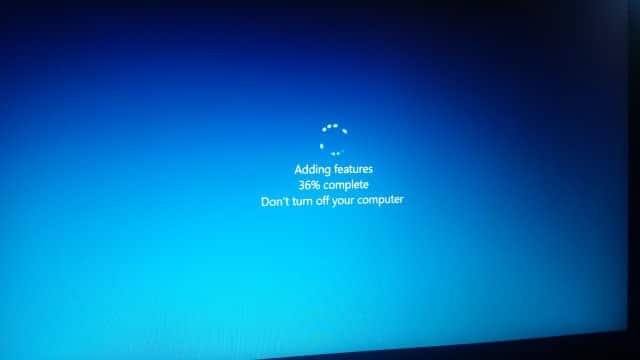

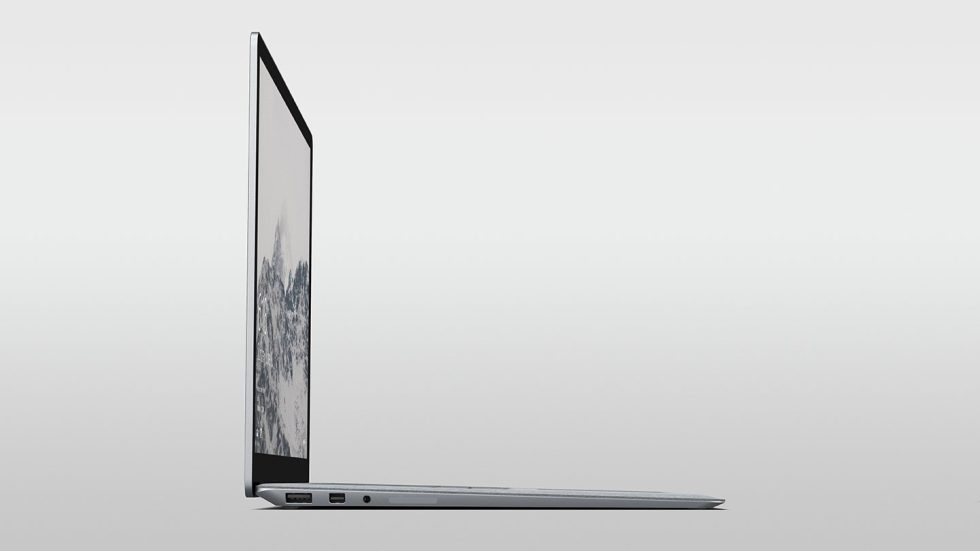


Chromebooks are instant on, and your profile/data is 100% cloud based. You can grab any Chromebook from the rack in the back of the classroom, open it up, log in and immediately get to work on your report or whatever.
I got an original Chromebook from Google I/O years ago based on an ancient ARM chip, and it's still perfectly usable for when my kid's friend comes over to do homework and they need an extra box.
Windows and Mac computers will never be that easy to setup, use or maintain. Chromebooks and the cloud system of apps that Google has made is pretty much a perfect combination of simple and cheap and good enough.