Seriously, if anyone has a technical answer to this I'd love to know what it is. Right now I can't intepret the soldered-on ram in desktops as anything other than a user-hostile cash grab.
Cash grab. Apple charge $1200 to upgrade from 16GB to 64GB in the Mac Pro. The retail price for 64GB of ECC DDR3 is $530. The markups on processor upgrades are similarly high.
Soldering down the ram uses less vertical space (thinner laptop by a few mm) and less planar space (smaller PCB). This lets them make the laptop marginally thinner and have more space for other things (mainly batteries). If you look at the smallest form factors in consumer electronics (cell phones for example), nearly everything is soldered to one board in pursuit of reducing size. Realistically, Apple would not be able to make their laptops as thin as they are without doing this. That being said, it does provide them with the nice side effect of being able to extract incredible margins on hardware upgrades.
Edit: Missed the point that we are talking about desktops, same idea still exists, it lets you make the form factor smaller and it requires less space since you don't need the connectors and you can be a bit more creative with the chip layout.
I'm not saying that I prefer the soldered-in versions, but back when I had a Mac with user-replaceable memory, the RAM would get unseated from time to time as my machine got jostled around in my bag and I'd have to open it up to fix it. I imagine that the Genius Bar saw a non-zero number of people bringing in computers that wouldn't boot because of this. Also, soldered-in saves space and thus helps with their pathological need to make MBPs thinner.
It's hostile to users who want to upgrade RAM, but pretty friendly to everyone else. It gets into the point of this article...when Apple looks at both demographics, the group that doesn't upgrade is much larger. Apple used to make decisions that would cater to the more non-mainstream use cases of their pro users. Now, they're focused almost entirely on the mainstream users.
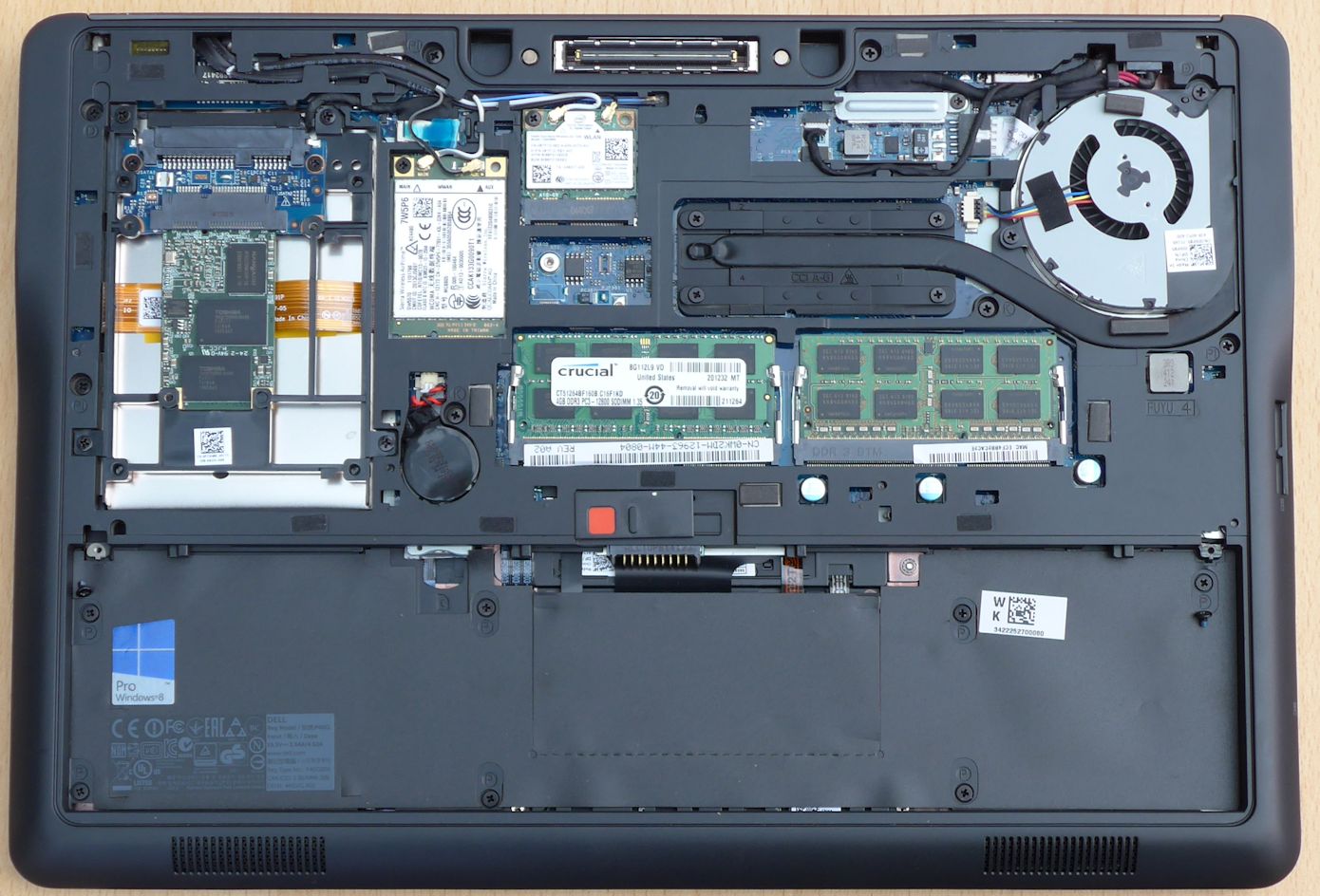
I'm using a Dell Latitude E7440, it's about 3 years old, and I carry it everywhere. It has a few dents here and there. I've gone to the pub with it a few times and only God (and Google location services) know how I got back, luckily with the notebook still in my backpack, and the backpack somehow inside my place.
But of course, soldering them in is not surprising. It cuts costs. A lot I guess. You need less connectors, you need less time assembling the laptop, less time supporting the very rare cases when there's a problem with the RAM.
>> But of course, soldering them in is not surprising. It cuts costs.
Unfortunately these cost savings don't get passed to the customer. RAM bumps in Apple BTOs cost notably more than socketed RAM of equivalent quality. And because the RAM is pre-soldered, you can't chalk the price premium to the cost of some guy popping RAM into sockets.
> Unfortunately these cost savings don't get passed to the customer.
You don't get to be the most profitable enterprise by passing on savings to the customer.
The premium price is there because people buy it. As simple as that. Peer fucking pressure. (Because no one wants to be the lame duck fiddling with a subpar device, even if the only thing that really SHIES is the polish on the same Intel turd.) Consumerism. It works very well.
The Mac Pro is made in the USA; the rest of Apple's product line is made in China. There is already considerable hand-assembly in the Mac Pro; the additional step of installing socketed RAM would add no more than a few cents in cost.
Using soldered RAM in the Mac Pro is transparently user-hostile. It serves no purpose other than to depress the used market and allow Apple to charge a huge premium for extra RAM.
> the additional step of installing socketed RAM would add no more than a few cents in cost.
It's not just about more labour though. It's also about having a different kind of component, another supply chain to manage, different QA processes... on what's at this point a very much non-core product line.